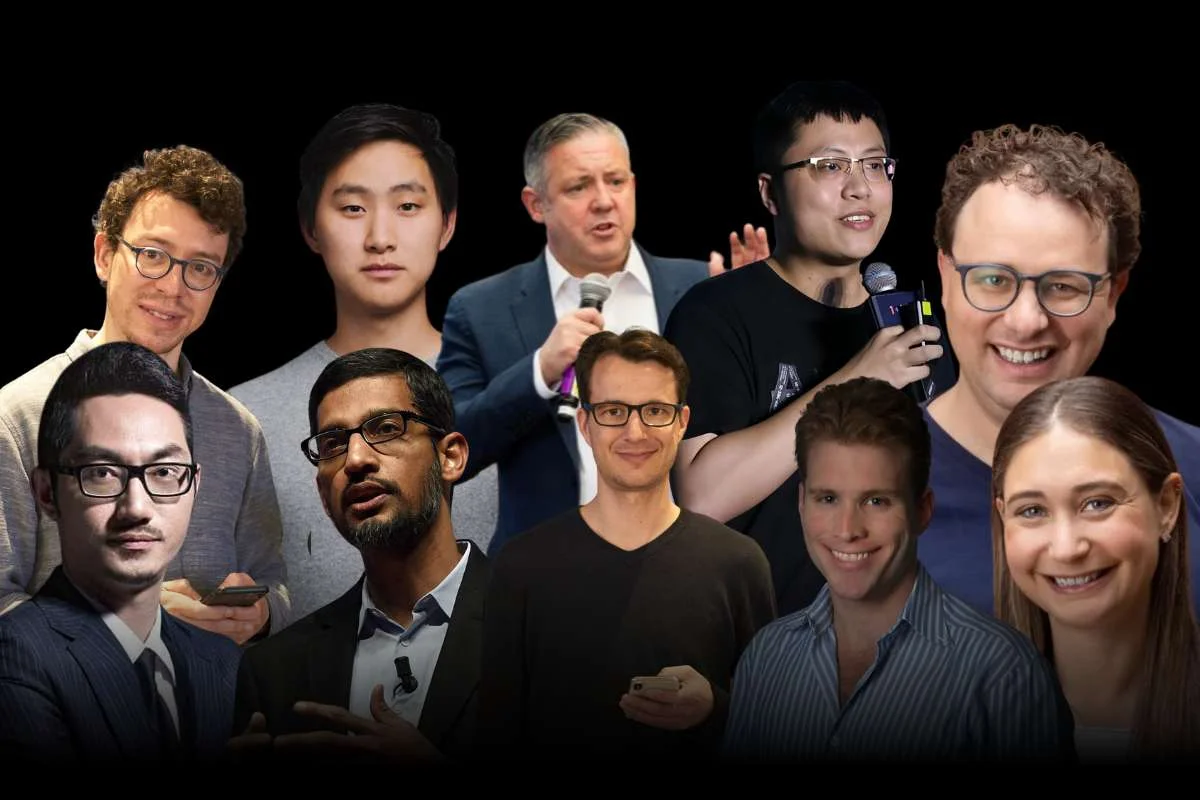
The tech world has always celebrated youthful founders. Bill Gates and Mark Zuckerberg famously launched their companies at just 19, proving early on that age was never a barrier to innovation. But a new shift is underway—this time driven by artificial intelligence. As Billion-dollar AI startups are now being founded by younger entrepreneurs — here’s what’s driving the shift, the average age of founders behind AI unicorns is dropping fast.
AI Founders Are Getting Younger, Not Older
According to a recent report from global early-stage venture capital firm Antler, the average age of founders behind AI unicorns has fallen dramatically—from a peak of 40 in 2021 to just 29 in 2024. The study analyzed 1,629 unicorn companies and 3,512 founders worldwide, revealing a clear trend: AI is changing who gets to the top, and how fast.
This pattern stands in sharp contrast to other industries. Outside of AI, founders are actually getting older. In 2014, the typical unicorn founder was 30 years old at launch. Between 2022 and 2024, that average rose to 34—highlighting how unique the AI space has become.
Young AI Founders Taking Center Stage
Several high-profile AI companies founded by young entrepreneurs have dominated headlines over the past year. Alexandr Wang, the co-founder of Scale AI—a $29 billion data-labeling powerhouse—is just 29. In June, Meta struck a $14.3 billion deal involving Scale AI and tapped Wang to lead its new AI research unit, TBD Labs.
The move followed Meta’s decision to reorganize its generative AI division after its LLaMA 4 model underperformed. In a notable shake-up, Wang became the manager of renowned AI researcher Yann LeCun, signaling Mark Zuckerberg’s push for faster, more entrepreneurial leadership in the AI race.
Elsewhere, Mercor—an AI-driven recruitment and talent platform—was co-founded by Brendan Foody, Adarsh Hiremath, and Surya Midha, all just 22 years old. The startup is already valued at over $10 billion. AnySphere, an AI-powered coding platform valued above $1 billion, is also led by founders in their 20s.
Why Speed Matters More Than Seniority
Fridtjof Berge, co-founder and chief business officer at Antler, says the qualities investors now look for have shifted. The ability to move quickly, test ideas constantly, and iterate without fear has become more valuable than decades of industry experience.
“In today’s AI environment, experimentation matters more than following traditional playbooks,” Berge explained. “Long corporate careers are still useful—but they’re no longer essential.”
He added that deep corporate experience can sometimes be a disadvantage. Seasoned professionals may struggle to think with a clean slate, while younger founders are often more open to radical experimentation and emerging technologies.
Corporate Experience Matters Less Than Fluency in AI
Berge also pointed out that technical fluency plays a major role in this generational shift. Many younger founders are fresh out of academia or research labs, where they’ve been trained on the latest tools and AI models.
“To really understand cutting-edge AI, it can help to be young,” he said. “That’s what many of these founders have been learning most recently.”
Antler’s report supports this view, showing that AI startups reach unicorn status faster than companies in any other sector—averaging just 4.7 years. Rapidly scaling examples in 2025 include Mistral, Lovable, and Suno AI.
Youth Sparks Growth—but Leadership May Evolve
Another study, the Leonis AI 100 report, echoed these findings, placing the median age of AI founders at 29. Most are in their mid-to-late 20s and often come straight from academic or research environments rather than traditional corporate paths.
Still, Berge cautioned that early success doesn’t guarantee long-term leadership. As companies mature, leadership roles often evolve.
“Young founders have always started companies,” he said. “But that doesn’t mean they’ll all still be running them in five or ten years.”
As history shows—from college dorm rooms to global tech giants—bold ideas paired with speed and adaptability can change the world. In the age of AI, youth isn’t just an advantage—it’s becoming a defining force.