Building software has never been more accessible. With powerful tools, open-source frameworks, and AI-assisted development, startups can move from idea to product in record time. Yet despite this advantage, many well-funded companies are still failing to gain traction. The problem isn’t product quality. It’s distribution.
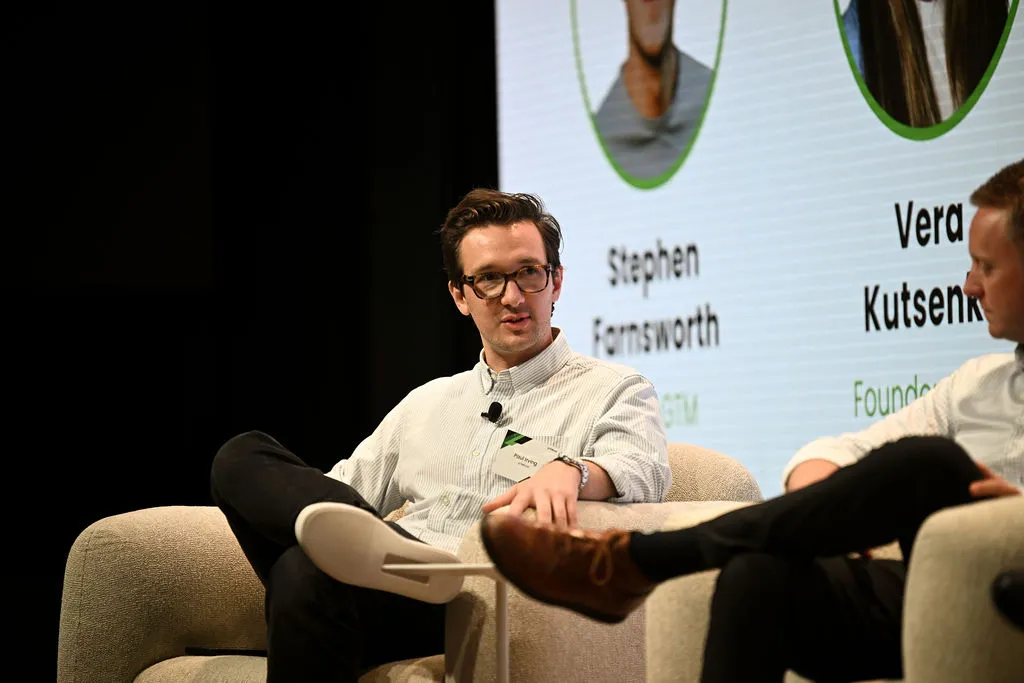
In the season finale of Build Mode, Paul Irving, Partner and COO at GTMfund, shared a hard truth: startups have over-optimized for building and under-invested in getting their products into the hands of the right users. His message was clear—GTMfund has redefined the distribution playbook for the AI era, and founders who ignore this shift risk being left behind.
The Old Go-To-Market Playbook Is Broken
For years, the traditional go-to-market model offered a familiar script: build a solid product, hire sales, spend on marketing, and scale headcount as quickly as possible. That approach worked in the early days of enterprise SaaS, when competition was thinner and innovation cycles were slower.
But in 2025, that formula no longer fits reality. AI has compressed development timelines dramatically. What once took years can now happen in months. New competitors appear constantly, and features are replicated almost overnight. In this environment, product advantage is fleeting. Distribution, on the other hand, is becoming the real moat.
Irving and the GTMfund team encourage founders to stop obsessing over marginal product improvements and instead differentiate through how they reach, engage, and grow their customer base.
There Is No One-Size-Fits-All Growth Engine
“The way you build your revenue engine today has more possible paths than ever before,” Irving explained. Every startup now faces a unique set of customers, behaviors, platforms, and opportunities. Trying to copy another company’s playbook is often a shortcut to wasted time and money.
Instead, he urges founders to design a go-to-market approach that fits their specific audience. AI can help small teams analyze data, test ideas quickly, and uncover unconventional ways to connect directly with users. But success still requires focus. Early teams can’t be everywhere at once. Choosing one or two channels and executing them deeply is far more effective than spreading efforts thin.
Creativity Beats Budget in the Early Days
From an investor perspective, GTMfund isn’t impressed by bloated ad spend or prematurely built sales teams. They want to see founders experiment, learn, and uncover non-obvious paths to customers.
Irving shared an example of a startup that didn’t rely on ads at all. Instead, the team became deeply involved in niche Facebook groups where their ideal customers already spent time. By consistently contributing, answering questions, and even launching their own communities, they created a high-signal distribution channel. In a group of a thousand people, hundreds were true decision-makers. That level of relevance made it possible to acquire dozens of customers each year through relationships rather than budgets.
This kind of hands-on, creative distribution is exactly what GTMfund looks for.
Distribution Is Wider Than Ever—But You Can’t Do It Alone
Irving believes the range of go-to-market possibilities has never been broader. Content, communities, partnerships, product-led growth, niche platforms, and AI-powered outreach all offer new angles for reaching customers. The challenge is not access—it’s clarity.
That’s why building a strong network of advisors and operators is so important. Founders need people who have tested different paths, made mistakes, and learned what actually works. At GTMfund, support goes beyond introductions. Portfolio companies are matched intentionally with operators who can provide targeted guidance, ensuring that every conversation delivers real value.
The Hidden Advantage: People Want to Help
One of the most encouraging themes from the conversation was the openness of the startup ecosystem. According to Irving, many experienced operators are eager to support founders—not just out of generosity, but because they understand how difficult building a company truly is.
When founders approach others with curiosity and a willingness to learn, doors often open. These relationships don’t just accelerate distribution; they sharpen thinking, reveal blind spots, and create momentum that no ad budget can buy.
The New Moat Is How You Reach Customers
In an age where software is easier than ever to build, the winners won’t be defined by who ships the most features. They’ll be defined by who builds the strongest, most creative, and most defensible distribution engines.
That’s the core belief behind GTMfund’s thesis—and the central takeaway from Irving’s perspective. In the AI era, product is the entry ticket. Distribution is the advantage.