Before Kim Kardashian’s NikeSkims Rift, split-toe sneakers were only for true devotees and outsiders. For years, the look lived on the fringes of footwear culture—loved by design obsessives, style rebels, and sneaker historians, but rarely embraced by the mainstream. Now, with one paparazzi stroll, the conversation has changed.
Long before today’s fascination with toe-shaped soles and barefoot-inspired shoes, there was the Nike Air Rift: a cloven, hoof-like sneaker that refused to blend in. Introduced more than two decades ago, its unmistakable split-toe silhouette never softened or followed trends. Instead, it waited. And now, in 2026, it’s having its loudest moment yet.
Kim Kardashian and the NikeSkims Rift Era
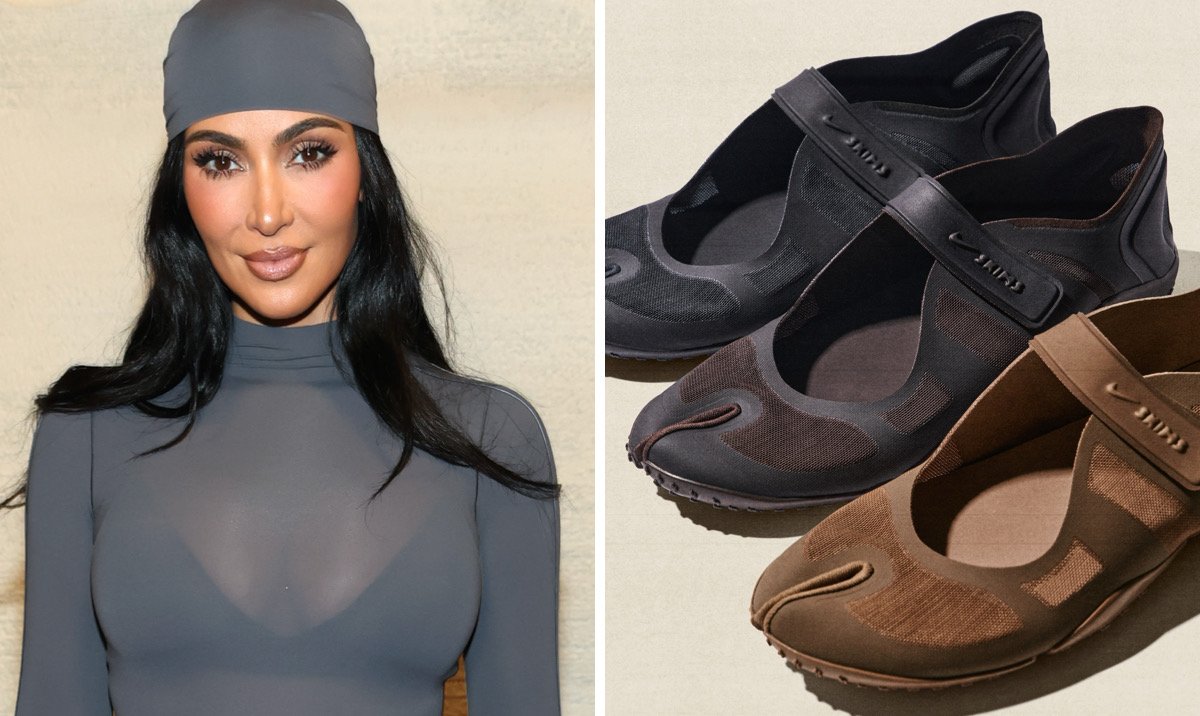
The revival gained serious momentum when Kim Kardashian revealed the NikeSkims Rift—an updated version of the classic design and the first sneaker born from the Skims x Nike partnership. Kardashian debuted the shoe across two recent paparazzi outings, styling it not as performance gear, but as fashion armor.
In Calabasas, she paired a black version with a leather bandeau, a bomber jacket, Skims leggings, and layered nylon bottoms. Later, she went sleeker, stepping out in a satin pair alongside a sharp Phoebe Philo jacket and, again, her signature Skims base layers. The message was clear: this wasn’t athleisure—it was styling.
Kardashian’s interest in split-toe footwear isn’t new. At the Maison Margiela haute couture show in Paris last year, she wore the brand’s iconic tabi heels, a dramatic velvet collaboration with Christian Louboutin. The NikeSkims Rift simply brings that high-fashion fascination down to street level.
A Shoe Born From Performance, Raised by Subculture
The Nike Air Rift first launched in 1996, designed by ultra-distance running enthusiast Kip Buck. Its name came from Kenya’s Great Rift Valley, and its shape was inspired by the country’s barefoot runners, whose feet naturally spread for balance, grip, and endurance. The split toe wasn’t a gimmick—it was anatomy.
The Rift quietly became part of a bigger shift toward natural-motion footwear, long before minimalist shoes and five-toe soles had their own trend cycles. Back then, it felt radical. Nike, in an experimental phase, was pushing beyond stadiums and tracks, creating sneakers that belonged just as much to street culture as to sport.
From Harajuku Grail to Global Reissue
Over time, the Air Rift found an especially devoted following in Japan, where it appeared in Harajuku style circles and cult publications like FRUiTs. The split-toe shape itself echoed centuries-old Japanese footwear traditions, giving the sneaker an unexpected cultural harmony.
For years, it was difficult to find, living mostly on resale sites and wish lists. A re-release in 2015 reintroduced it to a wider audience, but only recently has the Rift truly multiplied—returning in slimmer forms, lighter constructions, and experimental finishes, from soft suede to ballet-pink ribbons and double-strap designs.
Street Style’s New Favorite Oddity
Today, the Nike Air Rift is no longer a secret handshake. It’s been spotted on the streets on celebrities like Jennifer Lawrence and Sarah Jessica Parker, worn casually, repeatedly, and unapologetically. Its rise mirrors the larger embrace of low-profile flats, hybrid silhouettes, and “in-between” shoes that blur categories.
In many ways, the split-toe sneaker now occupies a similar space to the modern Mary Jane: minimal, strap-focused, versatile—but with an edge. It slips easily into wardrobes built around tailored jackets, romantic pieces, or experimental layering. Strange no longer means niche.
A New Generation of Split-Toe Icons
The Rift isn’t alone anymore. Designers across the spectrum are playing with divided toes and sculptural fronts: from polished designer heels to sporty collaborations and playful, ornamented boots. What was once shocking is now simply another design language—one that communicates individuality, taste, and a willingness to stand slightly apart.
With the NikeSkims Rift, the original rebel sneaker has entered a sleeker, more luxurious chapter. It still looks unconventional. It still challenges the foot’s outline. But now, it does so under brighter lights—and with a much bigger audience watching.