

In a significant step toward easing years of trade tension, Canada and China Reduce EV and Canola Tariffs in Bid to Repair Ties, reaching an initial agreement that lowers barriers on electric vehicles (EVs) and key agricultural products. The announcement came during Prime Minister Mark Carney’s high-profile visit to Beijing, signaling a renewed effort to rebuild relations with Canada’s second-largest trading partner after the United States.
A New Chapter in Canada–China Relations
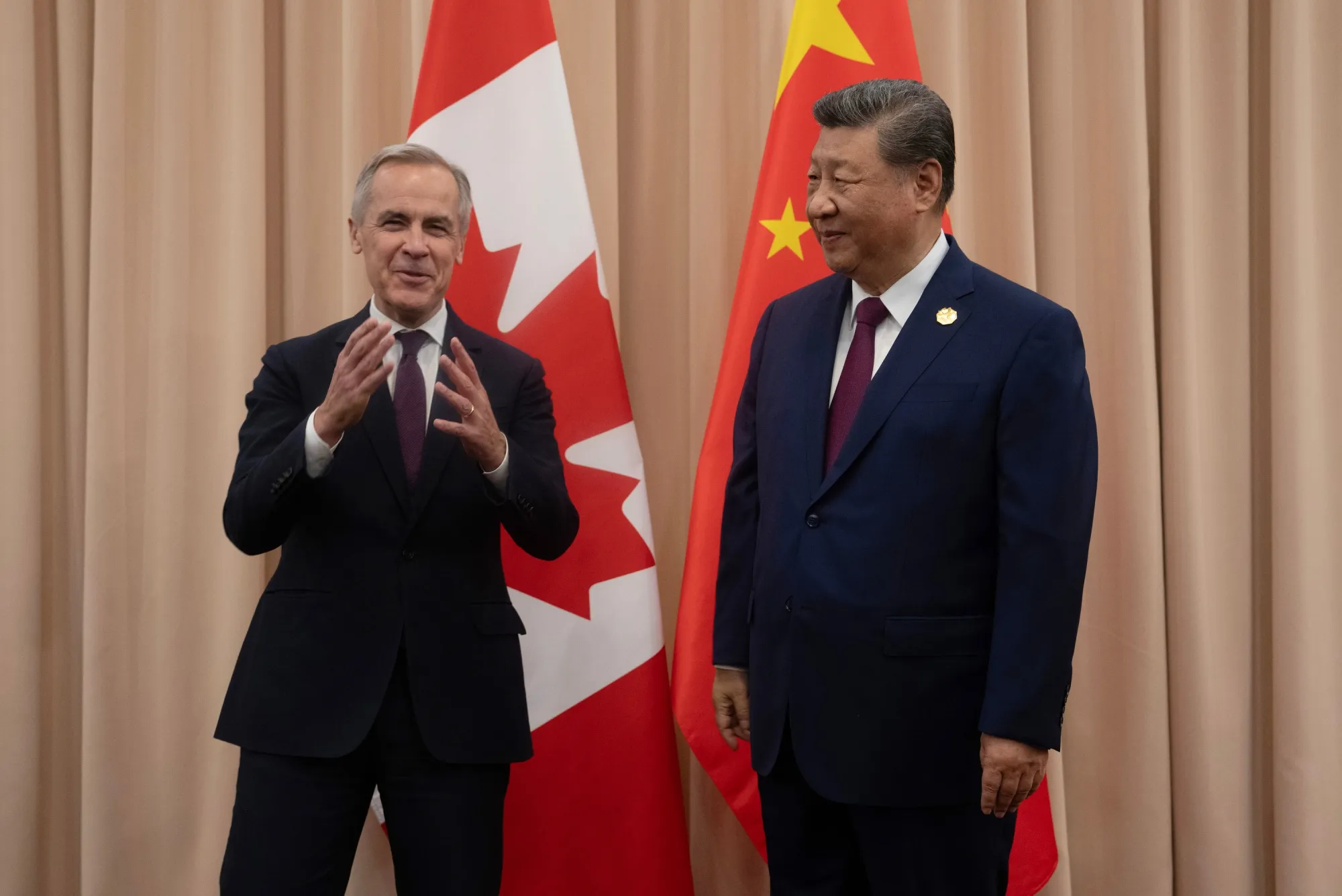
Mark Carney became the first Canadian prime minister to visit China since 2017, using the trip to reset diplomatic and economic ties strained by years of retaliatory tariffs. Following talks with Chinese President Xi Jinping and other senior officials, Carney emphasized that the deal marks a return to cooperation after prolonged friction.
Under the agreement, Canada will allow up to 49,000 Chinese-made electric vehicles to enter the country at a 6.1% most-favored-nation tariff. This is a dramatic reversal from the 100% tariff imposed in 2024 under former Prime Minister Justin Trudeau, a move that mirrored similar U.S. penalties. By comparison, China exported just over 41,000 EVs to Canada in 2023.
Carney described the move as a pragmatic reset. He noted that the quota will gradually rise to around 70,000 vehicles over the next five years, adding that exposure to global innovation and supply chains is essential if Canada hopes to build a competitive domestic EV industry.
Diverging from U.S. Trade Policy
Canada’s decision to ease EV tariffs places it at odds with Washington’s tougher stance on Chinese imports. While some members of U.S. President Donald Trump’s cabinet criticized the move ahead of a review of the U.S.–Canada–Mexico trade agreement, Trump himself struck a supportive tone.
Speaking at the White House, Trump said Carney was doing “what he should be doing,” adding that striking a deal with China was a positive outcome for Canada.
Not everyone at home agreed. Ontario Premier Doug Ford, whose province anchors Canada’s auto manufacturing sector, blasted the deal, warning it could open the door to a surge of low-cost Chinese vehicles without firm commitments for investment in Canadian factories or supply chains.
Agriculture at the Heart of the Deal
Agriculture proved to be another major pillar of the agreement. China had previously retaliated against Canada’s EV tariffs by slapping duties on more than $2.6 billion worth of Canadian farm and food products, including canola oil, meal, and seed. Those measures contributed to a sharp decline in Chinese imports of Canadian goods in 2025.
Under the new framework, Canada expects China to cut tariffs on canola seed to roughly 15% by March 1, down from a steep 84%. Tariffs on canola meal, along with lobsters, crabs, and peas, are also expected to be suspended until at least the end of the year. Markets reacted swiftly, with Canadian canola futures rising on the news.
Carney said the agreement could unlock nearly $3 billion in new export orders for Canadian farmers, fishers, and food processors.
China’s Commerce Ministry confirmed it was adjusting anti-dumping and anti-discrimination measures on Canadian agricultural and aquatic products in response to Canada’s decision to lower EV tariffs.
Broader Cooperation and Strategic Signals
Beyond trade, both countries pledged to restart high-level economic and financial dialogue and expand cooperation across agriculture, energy, and green technology. Carney revealed that President Xi committed to granting visa-free access for Canadian travelers, though details have yet to be finalized.
Energy cooperation also featured prominently. Carney said Canada plans to double its power grid capacity over the next 15 years, opening the door to potential Chinese investment in areas such as offshore wind. He also highlighted Canada’s ambition to export 50 million tonnes of liquefied natural gas annually to Asian markets by 2030.
A More Predictable Partner?
Carney suggested that recent dealings with Beijing have been “more predictable,” especially as Canada navigates a complicated relationship with the United States, where tariffs and political rhetoric have strained ties. Trump has even floated the idea of Canada becoming the 51st U.S. state, comments that have unsettled Ottawa.
China, meanwhile, is eager to strengthen ties with a G7 nation amid its own trade disputes with Washington. Analysts say the thaw between Ottawa and Beijing could subtly reshape the dynamics of Sino-U.S. rivalry, though Canada is unlikely to drift far from its traditional ally.
“Canada remains deeply embedded in U.S. security and intelligence frameworks,” noted Sun Chenghao of Tsinghua University. “A full strategic realignment away from Washington is very unlikely.”
Still, with Canada and China Reduce EV and Canola Tariffs in Bid to Repair Ties, both governments are signaling a willingness to move past recent hostilities and pursue a more stable, mutually beneficial economic relationship.

