How a French construction behemoth is looking to fix America’s housing challenge is no longer just a headline—it’s a strategy taking shape on U.S. soil.
More than three centuries after crafting mirrors for the Palace of Versailles, Saint-Gobain is channeling its legacy of innovation into a very modern problem: America’s housing shortage. Today, the French building materials powerhouse is focused on U.S. homes, supplying everything from windows and walls to ceilings and advanced construction systems designed to make housing faster and more affordable.
A $7 Billion Bet on North America
Over the past three years, Saint-Gobain has poured nearly $7 billion into North America—now its largest regional market. While acquisitions once drove expansion, the company has shifted gears toward organic growth. That means expanding existing plants, upgrading manufacturing capacity, and strengthening local production.
The numbers underscore the commitment. Saint-Gobain employs more than 18,000 people across 160+ sites in North America, with 2024 sales reaching $10.5 billion in the region.
“We’re doubling down in North America because the fundamentals here are incredibly strong,” said Mark Rayfield, CEO of Saint-Gobain North America. “The U.S. is underbuilt by nearly four million homes, and commercial properties also need major renovation.”
Building Faster Without Cutting Corners
At the heart of Saint-Gobain’s U.S. strategy is speed. The company is leaning into prefabrication and advanced assembly systems to reduce construction timelines and costs.
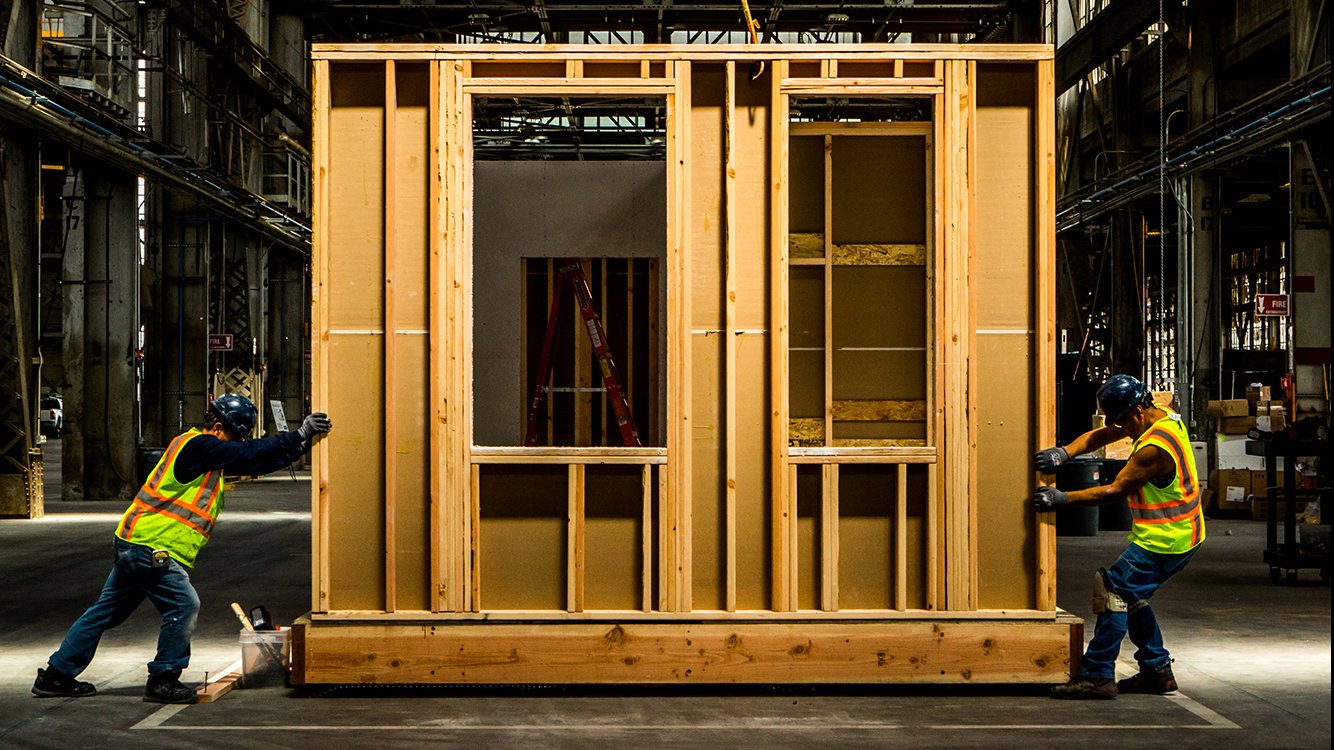
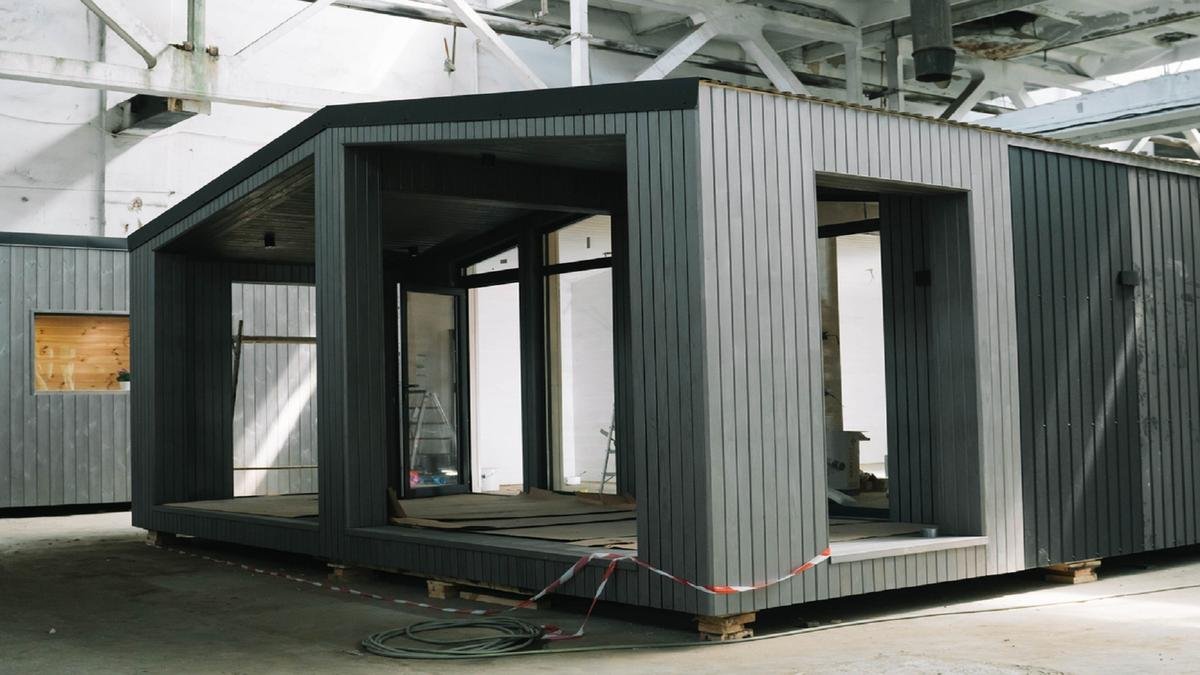
One standout innovation is its One Precision assembly system, which replaces traditional stick-built framing with factory-made wall, floor, and roof panels. Instead of relying on weather-dependent job sites, most of the work happens indoors under controlled conditions.
This approach allows site preparation and panel fabrication to happen at the same time—a shift that can reduce total build time by 30% to 50%. It also minimizes delays caused by labor shortages, weather disruptions, and complex trade coordination.
For small builders, the impact can be transformative. A contractor building 10 to 15 homes per year could potentially triple output simply by streamlining framing and weatherproofing.
Local Manufacturing, Fewer Tariff Headaches
Saint-Gobain’s “local-for-local” model is another advantage. By producing materials in states like Florida, Georgia, North Carolina, and New York, the company shields itself from tariffs that continue to pressure many U.S. homebuilders.
That said, workforce shortages remain a challenge. To address this, Saint-Gobain has taken a more hands-on role in training workers for construction and manufacturing roles—though Rayfield admits labor headwinds persist.
Scaling Up Supply in the Southeast
Last fall, CertainTeed—Saint-Gobain’s U.S. subsidiary—completed a major expansion at its Palatka, Florida facility, now the largest gypsum wallboard plant in the world. The site produces the full range of gypsum wallboard products for the Southeast, helping ensure supply chain reliability in a fast-growing region.
With both deep-water port access and rail connectivity, the facility doubles as a strategic distribution hub, supporting faster delivery and reduced logistics bottlenecks.
Sustainability Meets Resilience
While U.S. political focus may be shifting away from climate goals, Saint-Gobain hasn’t changed course. Rayfield argues that efficient construction still makes business sense—especially since prefab systems don’t come with a cost penalty.
Beyond sustainability, resilience has become a priority as extreme weather events intensify. Homes now need to withstand wildfires in California, hurricanes and floods in the Southeast, freezing rain in New England, and hail across the Midwest.
Saint-Gobain continues to invest in recycled materials, energy-efficient manufacturing, electric processes, and lower-carbon solutions—without pushing costs onto buyers.
“We have to make products that are affordable,” Rayfield said. “If we can do that with a lower carbon footprint, we will. But resilience is the real cornerstone of what comes next.”
As the U.S. grapples with a historic housing shortage, How a French construction behemoth is looking to fix America’s housing challenge offers a clear takeaway: faster builds, local production, and resilient design may be the most practical path forward.