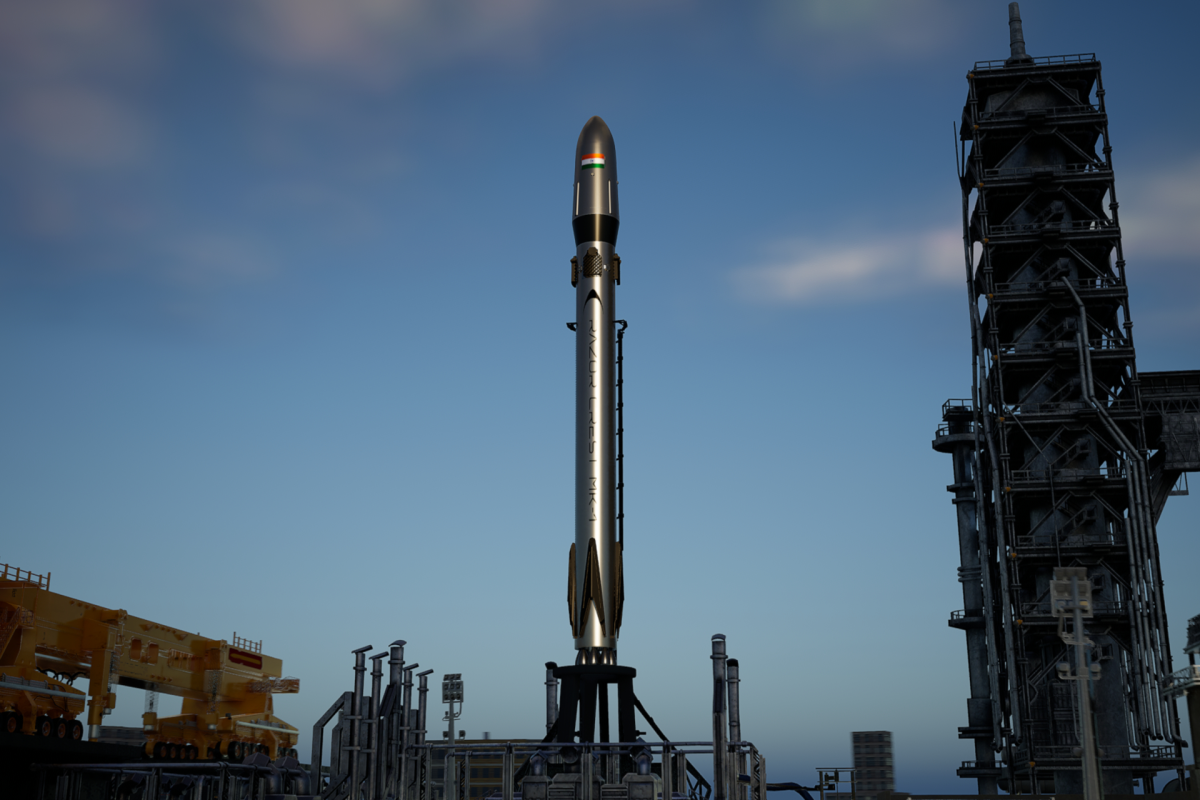
ndia’s private space sector is witnessing a sharp rise in ambition, and Ethereal Exploration Guild — popularly known as EtherealX — is quickly becoming one of its most talked-about players. The Bengaluru-based space technology startup has recorded a dramatic 5.5x jump in valuation, climbing to $80.5 million following the closure of its latest funding round. The surge comes as the company moves closer to critical engine hot-fire tests and lays the groundwork for its first technology demonstration launch planned for 2027.
Strong Investor Confidence Fuels Growth
EtherealX recently closed an oversubscribed $20.5 million Series A round, led by TDK Ventures and BIG Capital. Several well-known investors also joined the round, including Accel, Prosus, YourNest, BlueHill, Campus Fund, and Riceberg Ventures. This fresh capital comes less than a year after the startup’s $5 million seed round in August 2024, when it was valued at $14.6 million — underscoring the rapid confidence investors have placed in its vision and technical progress.
Riding India’s Expanding Space Economy
As India looks to expand its space economy from roughly $8 billion to $45 billion over the next decade, startups like EtherealX are attracting global attention. While India has traditionally focused on small launch vehicles and satellite components, the market is now shifting toward more advanced, scalable launch solutions — an area where EtherealX is positioning itself aggressively.
Globally, satellite operators are seeking reliable launch capacity and flexible schedules. SpaceX’s Falcon 9 has set the global standard for pricing and frequency, but EtherealX aims to challenge that dominance with a fully reusable launch vehicle capable of recovering both the booster and the upper stage — a level of reusability that could significantly reduce launch costs without relying on an in-house satellite constellation.
Advanced Engines at the Core
At the heart of EtherealX’s strategy are two engines developed entirely in-house. The Pegasus engine, designed for the upper stage, delivers 80 kilonewtons of thrust, while the much larger Stallion booster engine produces 1.2 meganewtons. The company is targeting engine hot-fire tests between June and July, a major milestone in its development roadmap.
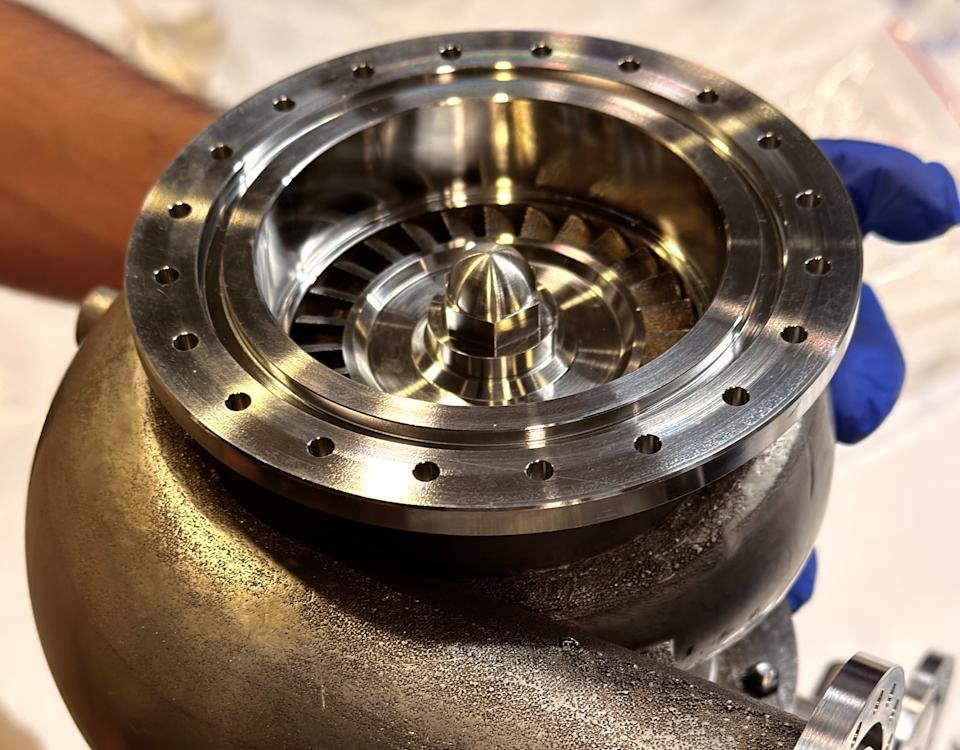
The Pegasus engine offers a vacuum-specific impulse of 323 seconds and uses a proprietary full-flow segregated cooling cycle, along with an additively manufactured turbopump built internally. Meanwhile, the Stallion engine operates on a gas-generator cycle and achieves 306 seconds of sea-level specific impulse, balancing power and efficiency for first-stage operations.
Razor Crest Mk-1 and the Road to Reusability
EtherealX plans to cluster its engines on its medium-lift rocket, Razor Crest Mk-1. The design calls for nine Stallion engines on the booster and 15 Pegasus engines on the upper stage. Unlike Falcon 9, which typically expends its upper stage, EtherealX is aiming for full-stage recovery — a technically challenging but potentially game-changing approach.
In terms of payload capability, the vehicle is expected to lift 24.8 tons in expendable mode, 22.8 tons when partially reusable, and around 8 tons in fully reusable configuration. Over time, the company aims to bring launch prices down to a range of $350 to $2,000 per kilogram, depending on mission profile and flight cadence.
Infrastructure, Customers, and Next Steps
To support testing and production, EtherealX operates Base 001, a rocket engine test facility in Tamil Nadu focused on upper-stage qualification. The company has also secured 150 acres in Andhra Pradesh’s proposed space city, where a large manufacturing and integrated testing campus is expected to become operational by mid-2026.
Commercial interest is already building. EtherealX has signed launch memoranda of understanding worth approximately $130 million, including agreements with Japan’s Space BD and Taiwan’s space agency, TASA — signaling early demand ahead of its demonstration flight.
The newly raised funds will primarily be used to complete flight qualification of the Stallion engine and to conduct clustered firing tests of the Pegasus engines. Currently employing 67 people, EtherealX plans to expand its workforce to around 90 employees in the coming months as it scales manufacturing and increases its testing tempo.
With ambitious technology, rising investor confidence, and a clear roadmap, EtherealX is positioning itself as a serious contender in the global launch market — and a potential flagship success story for India’s next phase of space innovation.