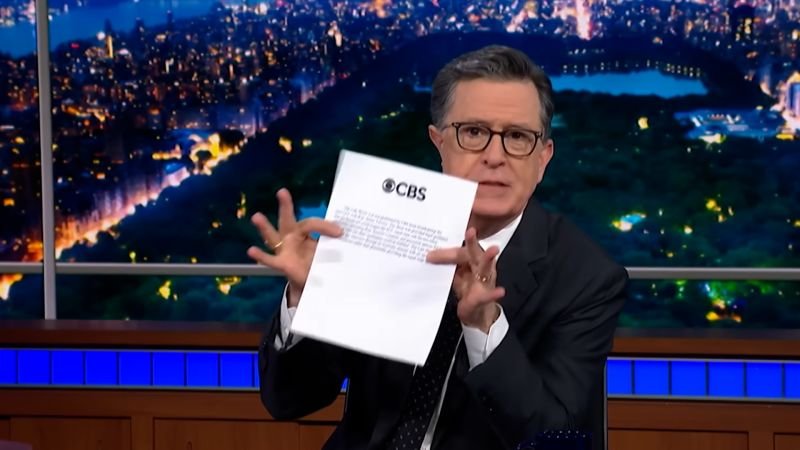
The Late Show with Stephen Colbert host Stephen Colbert ignited a fresh controversy this week after revealing that a planned interview with Texas state Rep. James Talarico would not air on his CBS program. During Monday night’s taping, Colbert addressed the audience directly, expressing frustration over the network’s handling of the segment.
At the center of the dispute is the allegation that Stephen Colbert claims CBS prevented his interview with James Talarico from being broadcast, a charge that has intensified debates about political speech, corporate influence, and federal broadcasting rules.
Colbert Addresses the Audience
Colbert told viewers that Talarico, a Democrat currently running for the U.S. Senate, had been scheduled to appear on the show. However, he said network lawyers intervened.
According to Colbert, CBS attorneys informed his team in “no uncertain terms” that the interview could not air. He added that he was initially advised not only to refrain from broadcasting the segment but also not to publicly mention the decision.
Instead, Colbert chose to bring the matter into the spotlight, prompting applause and laughter from the studio audience. He suggested that concerns over federal regulations — particularly oversight from the Federal Communications Commission — may have influenced the network’s caution.
FCC Guidance and Equal-Time Concerns
The controversy comes amid renewed scrutiny of broadcast networks’ political coverage obligations. The FCC recently reminded major networks of the long-standing “equal time” rule established under the Communications Act of 1934. This rule requires broadcasters to provide comparable airtime to competing political candidates if one is featured.
Notably, the agency indicated that talk show interviews may not automatically qualify for exemptions typically granted to bona fide news programming. That interpretation has raised questions across the late-night television landscape.
Colbert pointed to reports that the FCC had examined an appearance by Talarico on the daytime talk show The View, suggesting that heightened regulatory attention could be influencing network decisions.
CBS Responds
CBS denied blocking the segment outright. In a statement, the network said the show had received legal guidance indicating that airing the interview might trigger equal-time requirements for other candidates, including Texas Democratic Rep. Jasmine Crockett.
The network explained that it offered possible ways to satisfy those requirements. Ultimately, the show opted to publish the interview on YouTube while promoting it during the broadcast rather than navigating potential equal-time obligations on air.
Talarico later shared the online interview link and criticized what he characterized as political pressure. He referenced former President Donald Trump, arguing that free speech principles were at stake.
A High-Stakes Senate Race
Talarico is competing in a closely watched Democratic primary for a U.S. Senate seat. The eventual nominee will face either incumbent Sen. John Cornyn or Texas Attorney General Ken Paxton in the general election.
Texas has not elected a Democrat statewide since 1994, making the race one of significant national interest.
Political and Corporate Undercurrents
FCC Commissioner Anna Gomez weighed in on the dispute, describing CBS’ decision as troubling and asserting that the FCC lacks authority to pressure broadcasters for political reasons. She emphasized that networks are protected by the First Amendment in determining which interviews to air.
The broader corporate backdrop adds complexity. Paramount, CBS’ parent company, is involved in major regulatory matters, including merger activity requiring federal approval. The network also previously announced that Colbert’s show would conclude in May — news that followed his public criticism of a legal settlement involving Trump and the editing of a 60 Minutes interview.
Around the same time, the FCC approved a multibillion-dollar merger involving Paramount and Skydance Media, further intertwining media consolidation with federal oversight.
Late-Night TV Under Pressure
This episode is not isolated. In recent months, late-night hosts have navigated heightened political sensitivities. Jimmy Kimmel, host of Jimmy Kimmel Live!, briefly faced suspension amid separate FCC-related controversy before returning to the air.
The unfolding situation underscores growing tensions between entertainment programming, political campaigns, regulatory scrutiny, and corporate decision-making.
As debate continues, one thing remains clear: Stephen Colbert claims CBS prevented his interview with James Talarico from being broadcast, and that assertion has sparked a broader conversation about free expression, media independence, and the boundaries of federal oversight in modern television.