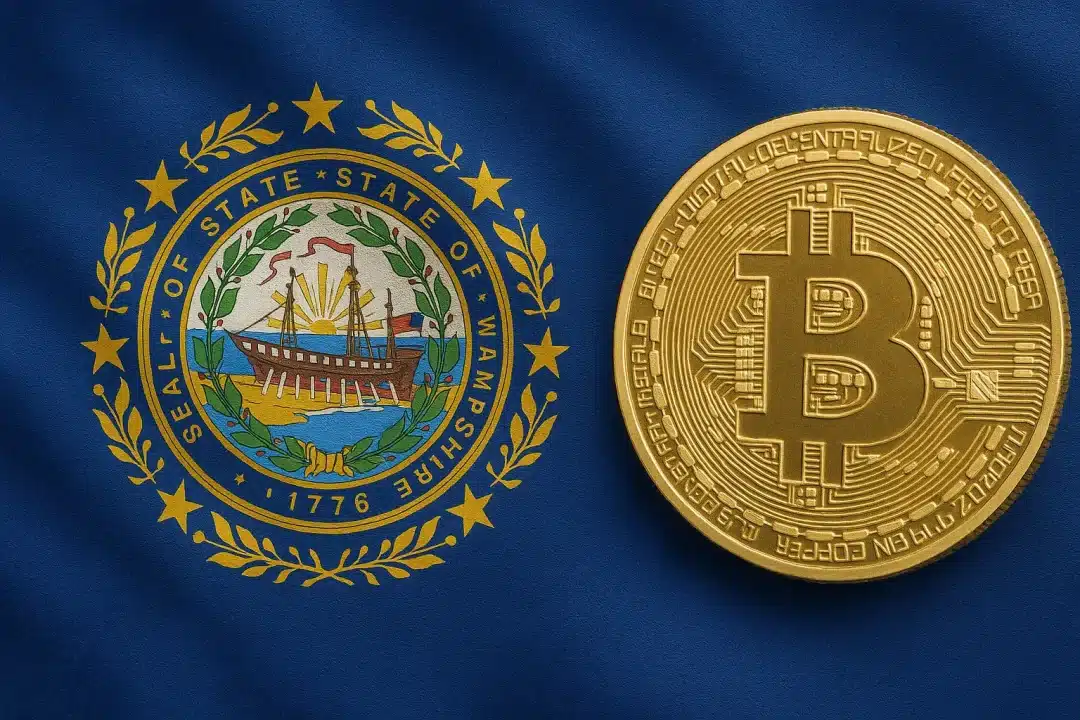
Across the United States, a growing number of state governments are taking bold steps into the world of digital assets. What was once viewed as an experimental financial frontier is now becoming part of mainstream public policy. U.S. states, led by Texas and New Hampshire, are racing to prove they can place Bitcoin on their public financial records, signaling a new era in how governments think about reserves, investments, and economic strategy.
The Rise of the “Bitcoin Reserve Race”
States from every region and political background are exploring ways to integrate cryptocurrency into their financial systems. Texas and New Hampshire have emerged as early leaders, but they are far from alone. Legislatures across the country are considering bills that would allow public funds to be invested in Bitcoin and other digital assets as part of broader financial planning.
Texas recently made history by becoming the first state to purchase Bitcoin as part of an official reserve strategy. The effort began with legislation introduced in 2024 and has since inspired similar initiatives elsewhere. Lawmakers in multiple states have joined what analysts are calling the “Reserve Race,” all seeking to position their economies for a digital future.
New Hampshire was actually ahead of the curve, passing its own crypto reserve law last May. That measure gave the state treasurer authority to invest up to 5 percent of public funds in cryptocurrency exchange-traded funds (ETFs), alongside traditional assets like gold. Arizona followed with comparable legislation, while Massachusetts, Ohio, and South Dakota are reviewing proposals in various committee stages.
Bipartisan Momentum Behind Crypto Adoption
Although many of these bills have been introduced by Republican lawmakers, cryptocurrency has proven to be a surprisingly bipartisan issue. The 2024 election cycle marked a turning point, with the crypto industry emerging as one of the largest corporate political donors in the country. Contributions flowed to candidates from both parties, and preparations are already underway for an even larger push in the 2026 midterm elections.
At the federal level, Congress is debating a comprehensive bill to regulate crypto markets. But at the state level, leaders are eager to show they won’t be left behind. According to Justin Marlowe, a public policy professor at the University of Chicago, much of the current activity is about sending a message.
“For governors and state officials, supporting crypto is a way to signal openness to innovation and new business development,” Marlowe explained. “These are relatively low-cost, low-risk steps that demonstrate a willingness to embrace the digital economy.”
He added that states like Texas, Arizona, and Florida have gone beyond symbolism and taken more concrete action, partly in response to the growing political influence of cryptocurrency advocates.
Building the Framework for Digital Investments
Most state proposals share common features. They typically authorize treasurers or other financial officers to invest a small portion of public funds in crypto while establishing strict oversight and reporting requirements. Because digital assets are more volatile than traditional investments, states are also focusing on stronger custodial safeguards and transparency measures.
Some plans even allow reserves to be funded using cryptocurrency already seized by government agencies, reducing risk to taxpayers. A similar approach was reflected in an executive order signed last year by President Donald Trump, which authorized a federal strategic Bitcoin reserve funded only with confiscated digital assets.
Why Texas Is Leading the Charge
Texas’s prominent role in the movement is no accident. The state has long been a hub for Bitcoin mining thanks to its affordable energy, business-friendly policies, and supportive regulatory environment. Over the past decade, Texas has become one of the most important centers for global cryptocurrency activity.
“Texas has spent years cultivating a strong Bitcoin ecosystem,” said Christian Catalini, founder of the MIT Cryptoeconomics Lab. “Once you’ve invested heavily in infrastructure and industry, adding Bitcoin to the state treasury becomes a logical next step.”
The Lone Star State also has extensive experience with gold reserves, making the transition to digital assets more familiar. Legal frameworks that govern precious metals storage have been adapted to accommodate cryptocurrencies, including the use of secure custodians and vault-like protections.
While Texas has not purchased Bitcoin directly on the blockchain, it has invested in Bitcoin ETFs. In late 2025, the state comptroller’s office allocated approximately $5 million to the BlackRock iShares Bitcoin Trust (IBIT). Officials described the investment as a temporary measure while long-term storage solutions are developed.
Experts say ETFs provide a safer, more regulated way for governments to gain exposure to crypto without the technical challenges of direct ownership.

Expanding Crypto Into Everyday State Finance
Beyond reserve funds, states are beginning to use cryptocurrency in more practical financial operations. New Hampshire approved plans for a $100 million Bitcoin-backed municipal bond, which would be the first of its kind in the United States. The proceeds would fund economic development projects, with Bitcoin serving as collateral instead of taxpayer dollars.
Several states—including Colorado, Utah, and Louisiana—now accept cryptocurrency as payment for taxes and other government services. These initiatives reflect a gradual but meaningful shift in public finance philosophy.
For generations, state and local governments prioritized safety and liquidity above all else when managing public money. While alternative assets like real estate and private equity have been added over time, cryptocurrency represents the most dramatic change yet.
Marlowe acknowledges that skepticism remains strong among traditional financial officials. “Many still see crypto as too speculative and volatile for public funds,” he said. “But others view it as a legitimate store of value with advantages like transparency and technological integrity.”
A Financial Future Shaped by Digital Assets
As more states explore the possibilities of Bitcoin and blockchain technology, the landscape of public finance is evolving. What began as a niche experiment is rapidly becoming a serious policy discussion across the nation.
Whether driven by innovation, economic competition, or political signaling, one thing is clear: U.S. states, led by Texas and New Hampshire, are racing to prove they can place Bitcoin on their public financial records—and in doing so, they are redefining how governments prepare for the future of money.