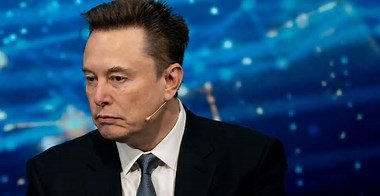
Elon Musk is demanding an eye-popping $79 billion to $134 billion in damages from OpenAI and its close partner Microsoft, alleging that the company betrayed its original nonprofit mission and misled him as a founding backer. The claim, first highlighted by Bloomberg, has quickly become one of the most talked-about legal disputes in the AI industry — not just for its size, but for what it says about power, principles, and control in artificial intelligence.
At the center of the damages estimate is C. Paul Wazzan, a veteran financial economist known for handling complex, high-value litigation. According to his professional background, Wazzan has been deposed close to 100 times and has testified in court more than a dozen times. His role in this case is to quantify what Musk allegedly lost — and what OpenAI and Microsoft allegedly gained — by shifting away from OpenAI’s original nonprofit ideals.
How Musk’s Early Bet Became a Massive Claim
Wazzan’s analysis argues that Musk’s $38 million seed contribution when OpenAI was founded in 2015 entitles him to a significant slice of the company’s current valuation, now estimated at roughly $500 billion. If accepted by the court, this logic would imply an extraordinary return — roughly 3,500 times Musk’s initial investment.
But the valuation doesn’t stop at cash alone. The expert report also factors in Musk’s early technical guidance, strategic input, and business influence, which allegedly helped OpenAI gain momentum during its formative years. Based on this combined contribution, Wazzan estimates “wrongful gains” of between $65.5 billion and $109.4 billion for OpenAI, and an additional $13.3 billion to $25.1 billion for Microsoft, which currently owns about 27% of the company.
More Than Just an Investor Dispute
Musk’s lawyers frame the lawsuit as a straightforward matter of investor rights, arguing that early startup backers are often rewarded with returns “many orders of magnitude greater” than their original stake. Yet the sheer scale of the damages claim has led many observers to conclude that this case is about far more than money.
That perception is hard to ignore given Musk’s personal wealth. His fortune is estimated at around $700 billion, making him the richest individual on the planet by a wide margin. According to recent reporting, his net worth exceeds that of Google co-founder Larry Page — the world’s second-richest person — by roughly $500 billion. Adding to that, Tesla shareholders approved a historic $1 trillion compensation package for Musk last November, the largest executive pay deal ever recorded.
This context has fueled headlines like Musk seeks up to $134B in OpenAI lawsuit, despite having a $700B fortune, capturing the public’s fascination with the paradox at the heart of the case.
OpenAI Pushes Back as Trial Nears
From OpenAI’s perspective, even a $134 billion payout would be relatively small compared to Musk’s overall wealth. That reality appears to reinforce the company’s stance that the lawsuit is less about financial harm and more about pressure and disruption. OpenAI has reportedly described the case as part of an “ongoing pattern of harassment,” rather than a legitimate grievance over lost returns.
As the legal battle intensifies, OpenAI has already begun preparing investors and partners for what lies ahead. Reports indicate the company recently sent a letter warning that Musk may continue to make “deliberately outlandish, attention-grabbing claims” as the trial approaches.
The case is scheduled to be heard in Oakland, California, roughly 15 miles east of San Francisco, with proceedings expected to begin in April. Whatever the outcome, the lawsuit is poised to set a precedent — not just for OpenAI and Musk, but for how the future of artificial intelligence is governed, funded, and controlled.