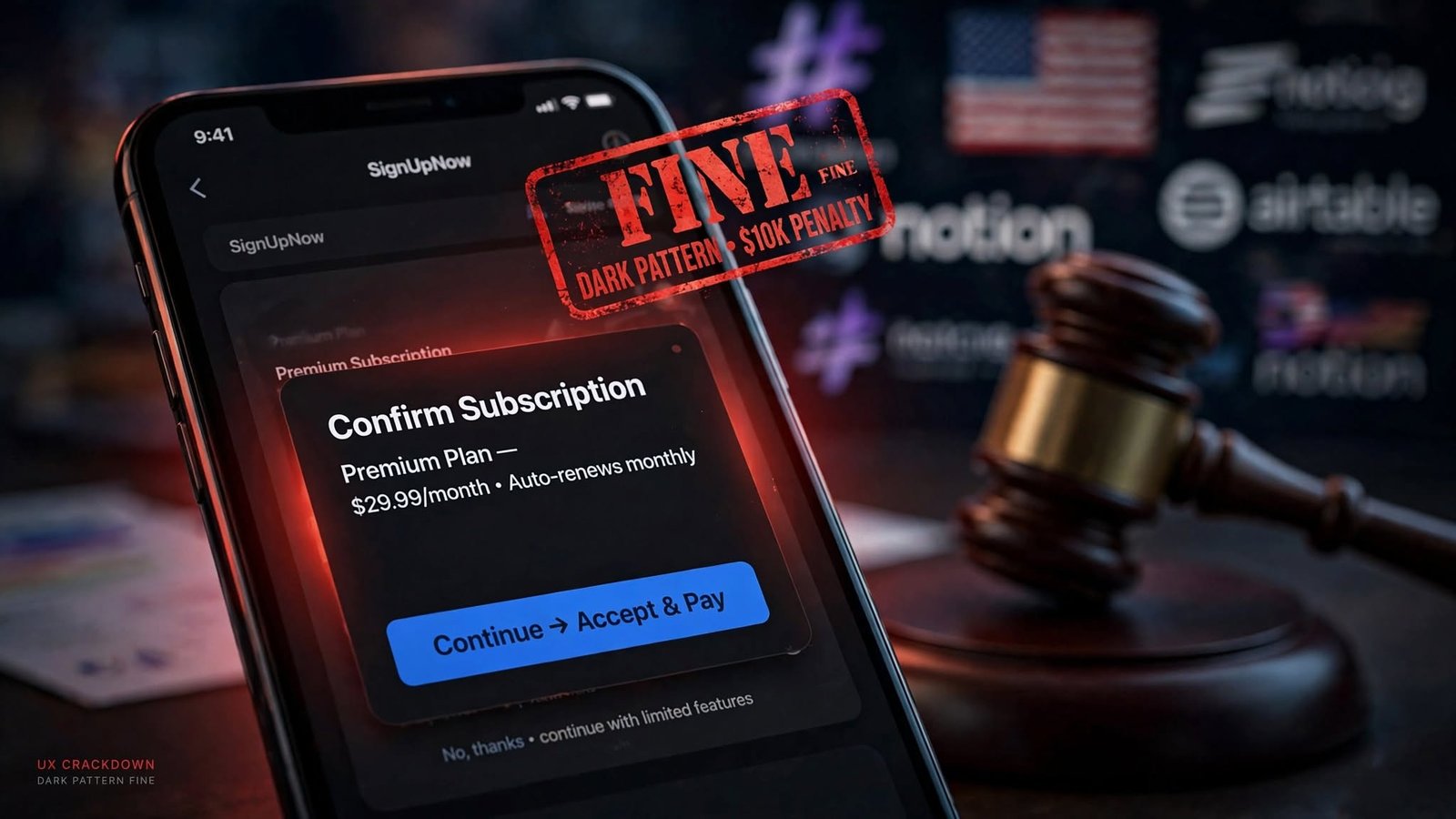
Startup App UX Crackdown: Global Dark Pattern Fine Raises Pressure on US Tech Startups
The Startup App UX Crackdown is gaining attention among technology entrepreneurs as regulators increasingly examine how digital products use interface design to influence consumer decisions.
A major regulatory case involving ride-hailing applications has highlighted the growing international focus on so-called dark patterns — user-interface techniques that can make it difficult for consumers to understand prices, cancel services, reject options or make independent choices.
The development is significant for startups because UX design has traditionally been viewed primarily as a product and conversion issue. Regulators are increasingly treating certain design practices as a consumer-protection matter when interfaces are considered misleading, coercive or unnecessarily difficult to navigate.
For US technology startups building products for international markets, the trend could mean that product, design, legal and compliance teams need to work more closely together.
What Are Dark Patterns?
Dark patterns are design techniques that can steer users toward decisions they might not otherwise make.
The term can cover a wide variety of practices, including confusing cancellation processes, preselected options, hidden fees, misleading buttons, difficult-to-find settings and interfaces that make one choice significantly easier than another.
Not every persuasive design element is automatically a dark pattern.
The regulatory concern generally arises when an interface interferes with informed consumer choice or uses misleading presentation to obtain consent, payment or continued subscription.
As more consumer services move to apps, regulators around the world have increasingly examined the way digital interfaces affect purchasing decisions.
Ride-Hailing Apps Face Regulatory Scrutiny
Ride-hailing platforms are particularly exposed to UX-related scrutiny because consumers regularly interact with their apps for pricing, bookings, subscriptions, cancellation and payment.
The recent regulatory action has brought attention to the way ride-hailing companies present choices and information to customers.
For startups, the case provides a broader lesson: an interface that increases conversion or reduces cancellations can potentially create regulatory concerns if the design makes important information difficult to understand or prevents users from making straightforward choices.
This can become especially important when startups expand internationally.
Why the Issue Matters for US Startups
A US startup may initially design its application around the regulatory environment of its home market.
However, once that company begins serving customers in Europe, Asia or other international markets, it may become subject to additional consumer-protection requirements.
This creates a challenge for startups that want to maintain a consistent global product experience.
A design that appears acceptable in one market may face additional scrutiny elsewhere.
The Startup App UX Crackdown therefore reflects a larger shift in how technology companies need to think about product design.
UX is no longer simply about making an application attractive or increasing engagement. Companies also need to consider transparency, informed consent and the ability of users to reverse decisions.
Cancellation Flows Under the Microscope
One of the most commonly discussed areas involving dark patterns is cancellation.
A user may be able to subscribe to a service in a few clicks but encounter multiple screens, warnings or confusing options when attempting to cancel.
From a business perspective, reducing cancellations can protect recurring revenue.
From a consumer-protection perspective, however, regulators may question whether the company is deliberately making cancellation more difficult than enrollment.
This has made cancellation flows an important area for product teams to review.
Startups offering subscriptions, memberships or recurring payments may therefore need to examine whether customers can cancel services as easily as they can sign up.
Hidden Charges and Pricing Transparency
Another important area is pricing.
Digital apps can present an initial price before adding service charges, processing fees, taxes or other costs later in the transaction.
While additional charges can be legitimate, the presentation of those costs can become problematic if important pricing information is difficult for consumers to see before they commit.
For ride-hailing businesses, pricing can be particularly complicated because fares may vary based on location, demand, distance, timing and additional services.
Clear presentation of the total cost can help consumers understand what they are agreeing to before completing a transaction.
Preselected Options Can Also Create Concerns
Preselected choices are another design feature regulators have examined.
For example, an application might automatically select an additional service, recurring subscription or marketing permission unless the user actively changes the setting.
The concern is not simply that a default exists.
The issue is whether the default is presented transparently and whether consumers have a genuine opportunity to make their own choice.
For startups, this means product teams may need to examine default settings across onboarding, checkout, subscriptions and privacy controls.
UX Teams May Need Greater Compliance Input
Historically, UX teams have often worked closely with product managers, engineers and marketing departments.
The growing regulatory attention to dark patterns could bring legal and compliance teams more deeply into the product-design process.
A startup preparing a new feature may increasingly need to ask questions such as:
- Is the pricing information clearly displayed?
- Can users easily understand what they are agreeing to?
- Are important choices presented neutrally?
- Can users reject optional services without unnecessary steps?
- Is cancellation straightforward?
- Are recurring charges clearly disclosed?
- Are consent settings understandable?
These questions can become part of product testing before a feature reaches customers.
International Expansion Adds Complexity
The regulatory environment becomes more complicated when a startup operates across multiple countries.
Companies may need to understand different consumer-protection frameworks, privacy requirements, subscription rules and digital-services regulations.
This does not necessarily mean every country will impose identical requirements.
Instead, startups may need to determine which rules apply to their specific products, customers and markets.
For venture-backed startups planning rapid international growth, this can become particularly important because changing an interface after launch can be more expensive than building transparency into the product from the beginning.
Dark Patterns Can Create Business Risks
Regulatory penalties are only one potential consequence of deceptive design practices.
A company can also face reputational damage, customer complaints and increased scrutiny from regulators or consumer organizations.
For startups, reputation can be particularly valuable during the early stages of growth.
Customers who believe a company is hiding fees or making cancellation intentionally difficult may become less willing to use the service.
Investors and corporate partners may also pay greater attention to compliance risks as a startup scales.
Regulation Could Influence Startup Product Design
The growing attention to dark patterns could change how startups measure product performance.
Traditionally, teams may track metrics such as conversion rate, average revenue per user, retention and engagement.
Future product reviews could place greater emphasis on whether those results were achieved through transparent and understandable user experiences.
This does not mean companies cannot optimize their interfaces.
Instead, the regulatory trend suggests that optimization strategies may increasingly need to operate within consumer-protection boundaries.
AI-Powered Interfaces Add Another Layer
Artificial intelligence could make the issue even more complicated.
Modern applications can dynamically personalize interfaces based on user behavior, preferences and previous interactions.
AI systems can potentially determine which messages, offers or interface elements a particular customer sees.
This creates questions about transparency and accountability.
If an AI-powered system learns which interface is most effective at encouraging a specific user to make a purchase, companies may eventually need to consider whether that personalization crosses consumer-protection boundaries.
The regulatory treatment of AI-driven personalization will likely continue developing as these technologies become more common.
Startups Can Build More Transparent UX
For entrepreneurs, one practical response is to treat transparency as part of product development rather than as a separate legal exercise.
Simple design principles can include clearly displaying prices, using understandable language, avoiding misleading button labels and providing straightforward cancellation mechanisms.
Companies can also conduct internal UX audits to identify areas where users may become confused.
Testing an interface with real users can reveal whether consumers understand what a particular screen is asking them to do.
Documentation can also help demonstrate that the company considered consumer protection during product development.
Investors Are Watching Regulatory Exposure
Regulatory compliance has become an increasingly important consideration in technology investment.
A startup with strong growth but significant unresolved regulatory exposure can face additional costs as it expands.
For investors, regulatory risk can affect projections, market-entry strategies and potential acquisition opportunities.
As dark-pattern enforcement develops internationally, startup founders may therefore need to consider UX compliance alongside other risks such as data protection, cybersecurity and financial regulation.
The Global Trend Could Affect US Product Teams
The significance of the latest regulatory action extends beyond the companies directly involved.
US startups increasingly build products for global audiences from their earliest stages. A company headquartered in California or New York may have customers across Europe, Asia and other regions.
As a result, international regulatory developments can influence product decisions even when the startup is not headquartered in the country where an enforcement action occurs.
The Startup App UX Crackdown is therefore becoming a broader signal for entrepreneurs: digital product design can have legal and regulatory consequences when it affects consumer choice.
Looking Ahead
The Startup App UX Crackdown reflects a growing international focus on how technology companies design digital experiences.
The regulatory debate around dark patterns is moving beyond individual app features and toward a broader question about how companies should balance business optimization with transparent consumer choice.
For US startups, the issue is particularly relevant as they expand internationally and build products that handle subscriptions, payments, pricing, privacy permissions and other consumer decisions.
Companies that incorporate transparency into UX development from the beginning may be better positioned to navigate an increasingly complex global regulatory environment, while regulators will continue determining which design practices cross the line from persuasion into prohibited or deceptive conduct.
FAQs
1. What is the Startup App UX Crackdown?
The Startup App UX Crackdown refers to increasing regulatory scrutiny of digital interface practices that may mislead, manipulate or make it unnecessarily difficult for consumers to make choices.
2. What are dark patterns?
Dark patterns are user-interface techniques that can steer consumers toward particular decisions through confusing, misleading or restrictive design.
3. Why are ride-hailing apps being scrutinized?
Ride-hailing applications involve frequent interactions involving prices, bookings, subscriptions, payments and cancellations, making their interface practices particularly relevant to consumer-protection authorities.
4. Are all persuasive UX techniques illegal?
No. Persuasive design is not automatically prohibited. Regulatory concerns generally depend on whether a specific design practice is misleading, coercive or interferes with informed consumer choice under applicable law.
5. Why does this matter to US startups?
US startups serving international customers may need to consider consumer-protection rules in multiple jurisdictions when designing and operating their applications.
6. Can difficult cancellation processes create regulatory problems?
They can attract regulatory scrutiny when cancellation is intentionally made difficult or when consumers are not given a clear and straightforward way to end a service.
7. What other UX practices can attract attention?
Potential areas include hidden fees, misleading buttons, preselected options, unclear consent requests and interfaces that obscure important terms.
8. How can startups reduce dark-pattern risks?
Startups can conduct UX audits, clearly disclose pricing and terms, use understandable language, provide straightforward cancellation and involve legal or compliance teams in sensitive product decisions.
9. Can AI create new dark-pattern concerns?
Potentially. AI-powered personalization can dynamically adjust interfaces and offers, creating additional questions about transparency and how consumer choices are influenced.
10. Will UX regulation affect startup growth?
Regulatory requirements can influence product development, international expansion and compliance costs, particularly for startups operating consumer-facing platforms across multiple markets.